The good news still got through

This year on vacation we visited Thomas Jefferson’s Monticello home and George Washington’s Mount Vernon home. Both of these Founding Fathers of our country owned slaves. Visiting their estates includes presentations on the history of slavery and seeing the places where the slaves lived.

Some slaves had it better than others, but still it was miserable being a slave. Slaves were only permitted to enter the big, beautiful house when they were working there. Their living quarters were vastly different from those who were free. Fear was a constant presence in their lives, used to keep them working and prevent them from escaping. They were viewed and treated as property, not as people.

Most of those who were captured and brought to the Colonies as slaves hadn’t heard about Jesus before they came. Christianity had a long history in Northern Africa but hadn’t made many inroads in the interior yet in the 1700s.

The slave masters often sought to forcibly make the slaves Christians. The human spirit generally rebels against something they are forced to believe. But somewhat contrary to human logic, the good news of Jesus took root in the hearts and minds of many slaves.

The slaves found hope in the good news they were loved by God. They were valued by the Lord as people of great worth, no matter their skin color. “God does not show favoritism but accepts men from every nation” (Acts 10:34). “So in Christ Jesus you are all children of God through faith … There is neither Jew nor Gentile, neither slave nor free, nor is there male and female, for you are all one in Christ Jesus” (Galatians 3:26, 28).

The story of the Exodus; of God hearing the cries of the Israelites when they were slaves and setting them free, especially brought comfort and hope to those 18th century suffering slaves. “The Lord said, ‘I have indeed seen the misery of my people in Egypt. I have heard them crying out because of their slave drivers, and I am concerned about their suffering. So I have come down to rescue them’” (Exodus 3:7-8).

The gospel getting through to slaves, in spite of the frequent cruelty and hypocrisy of the messengers, does not mean the heart and nature of the messenger is insignificant. It does show the power of the gospel. It is “the power of God that brings salvation to everyone who believes: first to the Jew then to the Gentile” (Romans 1:16). The gospel of Christ can penetrate through barriers and bring hope where it seems impossible. It reached into the hearts and minds of many of those slaves, and while their bodies remained bound, the gospel set their souls free.

Improved vision and a 100th birthday

I am having surgery done on my eye on July 14 to deal with a cataract and put in a new lens to improve my vision. July 14 is also the birthday of my pastor and mentor and the man who became like a second dad to me: Pastor Alvin Grothe. He would have been 100 years old this year. It seems appropriate that my physical vision might be improved on his birthday. God used him in wonderful ways to improve my spiritual vision.

A good spiritual mentor helps you see Jesus more clearly. Pastor Grothe helped me to see that the Lord is gracious and loving, kind and compassionate, gentle and humble. I caught a vision of God as welcoming and someone you want to go to. Pastor’s quickness to smile and laugh helped me see the joy of the Lord.

Hebrews 12:2 encourages us to “fix our eyes on Jesus.” Seeing Him clearly helps us endure trials and not grow weary and not lose heart.

We don’t need to see a list of good rules to live by or inspirational good advice. We need to see Jesus.

Soon after Pastor began serving at Bethany he had us sing at the start of each worship service: “Turn your eyes upon Jesus, look full in His wonderful face; and the things of earth will grow strangely dim, in the light of His glory and grace.”

Through his life, his example, the way he loved and encouraged me, Pastor turned my eyes upon Jesus.

I’m thankful for the opportunity to have my physical vision improved, but I’m even more thankful for God’s gracious work to help me see Jesus.

Jesus is present

Less than 20 of us were gathered together on a Saturday evening in a living room/dining room area. We were in Santiago, Chile, having a worship service in the home of Pastor Patricio and praying about the start of a new Free Lutheran congregation there. Earlier in our trip we had visited Santiago’s Metropolitan Cathedral. Our setting on Saturday evening didn’t resemble that impressive structure. And yet the Lord Jesus was there.

We celebrated Holy Communion that evening. The elements were simple but the experience was special. As Lutherans we believe in the “real presence” of Christ when we partake of the Lord’s Supper. The Lord is present in the elements for He said, “This is my body … This is my blood” (Matthew 26:26-28). We can be encouraged that the Lord who died for our sins, who defeated death and lives forever is really present. He was present with our small group, in that simple setting in Chile.

In the context of teaching about the church’s authority to declare the law and the good news of forgiveness Jesus promised, “For where two or three come together in my name, there am I with them” (Matthew 18:20). He was there in Chile. As they begin a new congregation, they are far away from other Free Lutheran congregations. They might seem like a small group that is all alone. But the Lord Jesus is present and with them.

As we live our daily lives, we are rarely, if ever, in ornate cathedrals doing impressive religious deeds. But, as we care for our families and friends, as we gather around God’s Word, as we have simple worship services, often with a relatively small number of people, the King of kings and the Lord of lords is really present. The world might not be impressed with our numbers or our settings, but that doesn’t matter so much to the Lord. He delights in being with His congregations. He graciously comes and lives with and among His people. Congregations that are trusting in Jesus, no matter where in the world they are or how large or small they are, go forward with confidence and hope knowing that the Lord is with them.

Not afraid to face the King

A privilege of being a pastor is getting to encourage people as they take their last steps on this earth and prepare to take their first steps in glory. I experienced that recently when a beloved member of our congregation passed from this life to the next.

Allan had faithfully served his family and congregation for many years. But as he entered his 90s his body did not permit him to serve in the ways he had before. He was still serving by encouraging and praying. But he was frustrated about the many things he couldn’t do, and how he needed help from others. He was ready to go be with the Lord.

Over the last couple of years, as we talked about the promises in the Bible that tell what happens to those trusting Jesus when this life ends, Allan was encouraged and at peace. He believed Jesus when He says, “Do not let your hearts be troubled. Trust in God; trust also in Me. In My Father’s house are many rooms; if it were not so, I would have told you. I am going there to prepare a place for you” (John 14:1-2). It didn’t trouble Allan to talk about this life coming to an end. He had a firm hope that Jesus died on the cross for his sins, rose again from the dead, and was now preparing a place for him.

Allan served honorably for 20 years in the U.S. Army. Like every soldier, Allan must have been called at some point to appear before superior officers. As he thought about meeting Jesus, however, his attitude wasn’t like a scared private about to face a stern general. His attitude was more like a son looking forward to soon going home to be with His Father.

The Lord is most definitely our Commander and Superior who reigns over us. Apart from faith in Christ, appearing before the Lord would be more terrifying than a disobedient private having to answer to the meanest, most demanding general in the entire army.

Faith in Christ makes it possible to have a different attitude about appearing before the Lord. We don’t fear when we are trusting in what Jesus did at the cross. We are children who know we are loved and wanted. When we go to meet the Lord we “enter His gates with thanksgiving and His courts with praise” (Psalm 100:4). Because of Jesus, we get to look forward to being welcomed home.

It goes better when we go together

The goose was all on his own. He was honking loudly, flapping his wings and flying fast. It looked and sounded to me as if he had fallen behind the others and was trying to catch up. As I watched him up in the sky it didn’t seem right that a bird like that was all alone.

As geese migrate they do it together. The impressive V formations soar across the sky. Their communication to one another is purposeful. They fly with organized precision as they travel together.

It is a long journey for those geese, many of them going from Alaska to California. What helps them have success on the journey is doing it the way God made them to do it: Doing it together.

Like the geese, we do our journey through life better when we do it together. Too often, though, we are like that solo goose. We are working hard and making noise. Trying to catch up and keep up wears us out. We are not sure if we will get to the right spot and we are carrying all the burden on our own.

The geese save energy by flying in formation. They honk to help them stay in formation and keep going the right direction.

We too find strength and save energy when we go through life in healthy relationships with others. We may think we can find our way through life on our own. The truth is, however, by ourselves we get tired and we go off course. We need one another for encouragement and direction.

Hebrews 10:24-25 says, “And let us consider how we may spur one another on toward love and good deeds. Let us not give up meeting together, as some are in the habit of doing, but let us encourage on another – and all the more as you see the Day approaching.” It can be tempting to want to fly solo. Other people frustrate us with all their “honking.” But the journey is long and often difficult. We need others to spur us on and encourage us.

God looked at Adam, before He created Eve, and said, “It is not good for the man to be alone. I will make a helper sutiable for him” (Genesis 2:18). That verse does not mean everybody ought to be married, but it does declare a truth about the human condition. It is not good for anybody to be alone and without good, healthy friendships. We need to be in relationships with other people; sharing our joys and our sorrows. We support each other and encourage one another. We help each other to find the way.

“God sets the lonely in families” (Psalm 68:6). Some have good, healthy biological families and, sadly, some don’t. Each person, however, can take hold of the promise that God wants to set each of us in His family. God wants each person to be in a congregation where the Word of God is taught and Jesus is worshipped. Traveling through life as part of an encouraging, loving congregation has been one of the greatest blessings of my life. It is great we do not have to fly alone. Joy is found as we join with Jesus and His family on this journey.

The peace of being acceptable

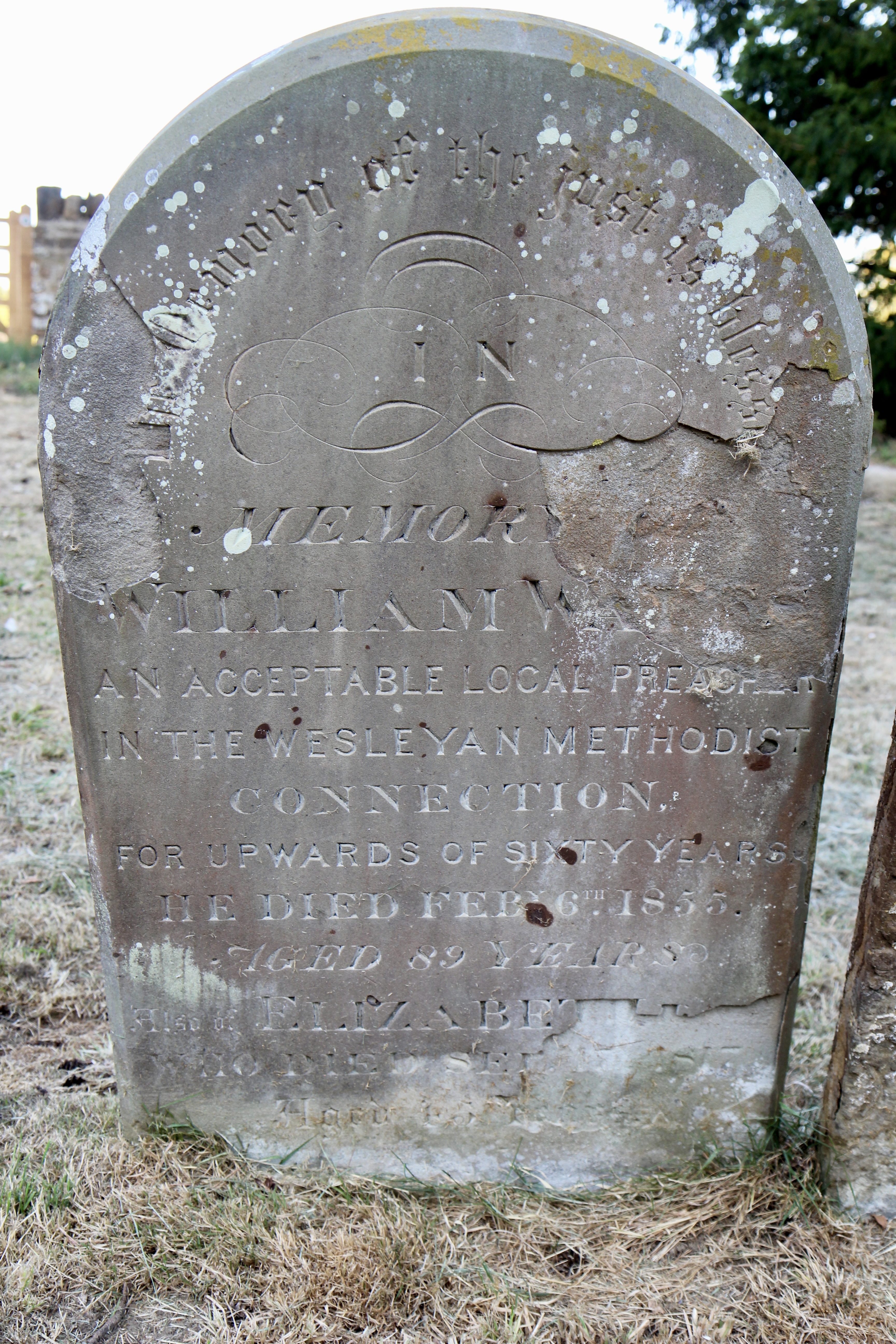
We were in a classic old cemetery in the English countryside. The headstones that populated the graveyard told the stories of the people who used to populate the village. As I read one stone I thought, “This is someone I wish I could have known.”

His name was William. I couldn’t make out the last name. He died in 1855. He was described as “An acceptable local preacher in the Wesleyan Methodist connection.” We were in the graveyard of an Anglican church. Anglicans and Methodists didn’t always get along. Sometimes the Anglicans viewed the Methodists as a breakaway movement that was taking people away from their congregations. William must have earned some respect from the Anglicans to be called acceptable and accepted to be buried in the Anglican cemetery.

Our culture can get quite lavish with its praise. We are tempted to long for more than to be acceptable. Not many of us, however, are extraordinary in the eyes of the world. William was a Wesleyan, part of a movement named after an iconic figure of church history: John Wesley. Not many John Wesleys come along. Most of us are like William.

The Bible says, “Not many of you were wise by human standards; not many were influential; not many were of noble birth. But God chose the foolish things of the world to shame the wise; God chose the weak things of the world to shame the strong. God chose the lowly things of this world and the despised things—and the things that are not—to nullify the things that are,so that no one may boast before him” (1 Corinthians 1:26-29). God delights in using those who are acceptable.

William was described as a local preacher. I expect he didn’t strive to make a name for himself throughout the British Isles. He cared about his local community and served the people there. He didn’t long to be somewhere else. He loved and served the local community in which God had placed him.

“An acceptable local preacher” may not seem like an impressive title to the world, but it is a high and noble calling. Whether we’re a preacher or a plumber, a farmer or a firefighter; being acceptable and local is a good thing. We don’t have to be impressive or extraordinary. We find joy and peace in the promise that we are acceptable to God by faith in Jesus.

Come and see the wonder of Jesus

We recently had the privilege of hosting a friend from India, Dr. Anand Kumar. It was his first time visiting the beautiful Pacific Northwest. As we enjoyed an idyllic summer day, we didn’t stay inside and give him a book that tells how a seedling grows into a large evergreen tree. We took him into the countryside and went on a walk surrounded by majestic trees reaching to the sky. We didn’t print out an article on the geological make-up of Mt. Baker. We drove up near the mountain and let him see it in its snow-covered, awe-inspiring beauty. We did more showing than telling.

Those of us who know Jesus are given the privilege and the mission of sharing with others the good news of Christ. We tell people what Jesus has done, but we also show them. We share Biblical facts and information, but we don’t stop there. We share with people the beauty of Christ. That beauty is seen when God’s people live lives of humble service. It is seen when love is sincere, joy is infectious and souls are at peace.

In his book titled Preaching, Timothy Keller wrote: “Preaching cannot simply be accurate and sound. It must capture the listeners’ interest and imaginations; it must be compelling and penetrate to their hearts. … Change happens not just by giving the mind new arguments but also by feeding the imagination new beauties.”

The mission work of Christ involves more than just imparting accurate information. We get to be involved in life transformation. We speak to both people’s minds and their hearts. We strive to present the good news in such a way that it captures people’s imaginations with the wonder and majesty of the Savior.

When Philip told Nathanael they had found the Messiah, Nathanael was skeptical. Philip didn’t enter into an argument. He issued an invitation, “Come and see” (John 1:46). In similar manner we get to invite the world to come and see Jesus.

Dr. Kumar had seen pictures of snow and read about it, but he had never experienced it before. There was some snow by the trail when we went up near the mountain. He got to walk on it and have his feet sink in it. He got to hold it and have a snowball thrown at him. It was a unique and memorable experience.

The love of Jesus is like snow. You don’t know it if all you have done is read about it. You need to grab hold of it and let His love grab hold of you.

Lifting others up

It was one of those chairs with a sinking feeling.Students sank down low when they visited a college professor of mine and sat in the visitor’s chair in his office. In stark contrast, his chair was rather high, causing students to strain their neck a bit as they looked up at him. I felt the nature of those chairs was strategic on the professor’s part. It gave you a physical lesson in who was the teacher and who was the student.

In our relationships it is tempting to try to do what the professor did with the chairs: elevate ourselves above others. The Bible, however, calls us to act quite differently. “Honor one another above yourselves” (Romans 12:10). “… do not take the place of honor … take the lowest place” (Luke 14:8, 10).

Pastor Tim Keller was a successful pastor, popular speaker and author. When he went to be with the Lord last year, I read a number of the reflections people had about him. A common theme was Keller’s humility. He treated people with respect, never belittling them. Even though he was so smart and accomplished, he didn’t act like he was above others.

The apostle Paul was given the role of teacher and leader. But he described what he had received as “the authority the Lord gave me for building you up, not for tearing you down” (2 Corinthians 13:10).

It would be helpful to have that kind of mindset in all of our relationships. “I have been brought into relationship with this person to build them up, not to tear them down.” In our relationships we are called to be builders, not the demolition crew.

We are not to worry about getting proper recognition. We are not to strive to get the higher seat and the most praise. Instead we humbly take the lower seat of a servant. We strive to lift others up. We do so because Christ did that for us. In His final leadership lesson with His disciples He wrapped a towel around His waist, lowered Himself and washed His disciples’ feet. “Now that I, your Lord and Teacher, have washed your feet, you also should wash one another’s feet. I have set you an example that you should do as I have done for you” (John 13:14-15).

In this social media age there is much temptation and opportunity to promote self and declare to the world what we have done. Our example, though, is not the world as it keeps striving to assert superiority over others. Our example is Jesus, who humbly serves undeserving sinners like us. He took the lowest position of the cross in order to lift us up. He lifts us out of slavery to sin. He lifts us into forgiveness and freedom. He lifts us to the great honor of being children of God by faith in Christ.

Seeing beauty in the midst of trials

It seemed the leaves changed color overnight.One morning last month I looked out the window and the redness of the leaves on a tree across the road grabbed my attention. It was cold the night before and that brought vivid, beautiful color to the leaves.

Many of us view less sunlight and colder temperatures as harsher weather, but they bring out beauty in the trees. Harsher conditions in our lives are something we don’t enjoy and seek to avoid, but they can enhance our view of the beauty of the Lord.

“Consider it pure joy, my brothers, whenever you face trials of many kinds, because the testing of your faith develops perseverance” (James 2:2-3). Testing and trials can be hard. Our first thought is often not joy and thanksgiving. But the trials can lead to growth in us and a better vision of the beauty of God’s grace and love.

Trials and harsh conditions are as inevitable as the change of seasons and the coming of fall in certain regions of the world. Sickness comes. Families face hard times. We live out the reality of Jesus’ declaration: “In this world you will have trouble.”

We give thanks that along with telling us of the inevitability of trouble, Jesus also proclaimed another certain truth: “But take heart! I have overcome the world.” Because He has overcome, in Him we “may have peace” (John 16:33).

In our congregation some people have faced harsh conditions. But in the midst of it, beauty has been seen.

It was beautiful to see a number of people giving up a Saturday to help a family going through a ton of trials move to a new place. It has been beautiful to see congregation members taking others to doctor’s appointments and urgent care visits and sitting with them in waiting rooms. It is beautiful to see one part of the body of Christ lovingly making food to feed others.

When you go through difficult days try to look for the beauty. Sometimes it is right there in front of you like the tree across the street. Other times it might take a while. We trust in the promise of God and go forward in hope. The beauty of God’s grace and love will be seen.

Psalm 27:4-5 says: “One thing I ask from the Lord, this only do I seek: that I may dwell in the house of the Lord all the days of my life, to gaze upon the beauty of the Lord and to seek Him in His temple. For in the day of trouble He will keep me safe in His dwelling; He will hide me in the shelter of His sacred tent and set me high upon a rock.” We give thanks that in the day of trouble God still cares for us. We are still able to gaze upon the beauty of our loving, gracious Savior.

Learning from healing

Getting hurt isn’t the most enjoyable way to learn things, but it can teach you about the human body. I was trying to carry too much down some stairs and I tripped and fell. I fractured bones in my wrist and elbow. They are healing well and I didn’t need surgery. It could have been worse and I have much to be thankful for.

The Bible describes the human body as probably the best illustration of what the church is like. Experiencing how my body responded to the break has provided some lessons in the nature of God’s church.

Soon after the fracture my wrist started to swell. Blood was rushing from other parts of my body to the injured part. White blood cells got the word that a part of the body was hurting. They headed to the hurt in an effort to help bring healing.

The body of Christ should work in a similar way. When one part hurts the other members of the body jump into action. We don’t go away from the part that is hurting. We go to them with love and compassion and a desire to help in the healing process. “If one part suffers, every part suffers with it” (1 Corinthians 12:26).

I have been blessed, on numerous occasions, to see members of the congregation come alongside another member who is going through a tough time. They have done so in sympathy, for they have gone through similar trials. They have hurt with the one who is hurting.

When one of your hands isn’t working at full strength, you realize how much easier it is when you have good use of both hands. Some everyday tasks become a bit of a challenge when you’re trying to do them with only one hand. The body works best when all the parts are working.

It is similar in the church. When one part isn’t functioning, the rest of the body is affected. Nobody in the congregation should think their part is insignificant. “The eye cannot say to the hand, ‘I don’t need you!’ And the head cannot say to the feet, ‘I don’t need you!’ On the contrary, those parts of the body that seem to be weaker are indispensable” (1 Corinthians 12:21-22). Everyone in the congregation matters and everyone has an important role to play. We need each part to do its part.

My arm was in a sling and a splint for about two and a half weeks. That isn’t a long time, but it was enough for my arm to start freezing up a bit. It has been an illustration of the phrase: “Use it or lose it.” Now I’m receiving occupational therapy. I’ve been given exercises to do to restore range of motion and get the arm back to normal use.

Our service in the body of Christ can work in similar fashion. If somebody isn’t serving and is failing to use the gifts God has given them, those gifts might start “freezing up” in a way. If a person stops caring for others, stops looking for ways to share the love of Jesus, they’ll start on a downward path where service will seem harder and less natural.

I’ve known people who have been up in years but kept doing some exercises because they knew they needed to keep their bodies moving and functioning. I’ve known others who have kept their souls active as well. They kept faithfully praying for their family and others around the world. They kept striving to grow in the Lord. They showed the love of Christ to people God brought into their life. They kept using what God had given them.

When the accident first happened there was pain that let me know something was wrong. Now when I do exercises I feel some pain, but that is to be expected. I need to keep doing the exercises.

We get tempted to want to avoid any pain. Talking to somebody about Jesus isn’t always easy. It can feel a little painful at times to talk about sin and the need each of us has for a Savior. Serving can be hard. Loving people can wound your heart and soul. But don’t stop just because it hurts.

The apostle Paul told Timothy, “endure hardship” (2 Timothy 4:5). We need to endure the pain and keep doing the exercises. Keep serving the person who is hard to serve. Keep sacrificing comfort and ease in order to share the good news of Jesus. There might be pain and hardship now, but we trust the promise that the spiritual exercises make us stronger and one day it will all be so much better.