Enjoy the silence

The last part of August I traveled with friends to Mongolia and China. We visited their son and brother and my friend, David Olson, who is a missionary in Mongolia. While in Mongolia we went out into the countryside, into the Gobi desert.Image

Even though it’s called a desert it wasn’t all sand dunes and 100 degrees. It was, of course, a lot different than the Pacific Northwest. There weren’t many trees or bodies of water. There was some grass and a lot of interesting rock formations. The weather was pretty ideal. We picked the right time of year to go.Image

We spent three nights in the countryside staying in gers. They are like what we in the States call yurts. They are used a lot by the nomads in Mongolia. They were nice to stay in.Image
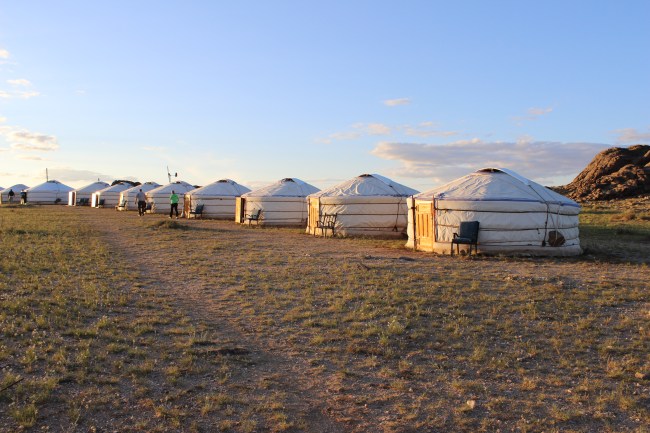
As we were out in the desert the thing that stood out to me the most was the silence. There were moments when I would sit in a chair in front of the ger and realize, “There is no sound to be heard.” There was no traffic noise. No lawn mower or weed eater was being used. No neighbor was playing music. No refrigerator was running. No dogs or sea lions were barking. There wasn’t any wind rustling through the leaves of a tree. No birds were singing. No bugs were buzzing around. It was truly silent. I’m not sure if I’ve ever really experienced that before.

We live in such a noisy world. We get used to it, maybe to such an extent that silence surprises us and is almost uncomfortable. Sometimes we turn on the TV or the iPod, not so much because there is something we really want to watch or listen to. We just feel a need to fill our lives with a little more noise.

It is easier to hear things when it is silent. When somebody else at the ger camp moved around and the silence was broken, I heard it, even though they weren’t making much noise at all.

A Bible verse I thought about when I was sitting in the silence of the desert was Isaiah 30:15: “This is what the Sovereign Lord, the Holy One of Israel, says: ‘In repentance and rest is your salvation, in quietness and trust is your strength, but you would have none of it.’” That statement “you would have none of it” is maybe a description of how we often try to avoid silence. Maybe we’re afraid if it gets too quiet we’ll hear our conscience convicting us, or God’s Spirit directing us down paths we’re not so sure we want to go.

There is value in silence. Yes, we may hear words of conviction, but we can also hear words of comfort and encouragement. In quietness we can find strength. When the world around us is quiet and, more importantly, when our soul is quiet and at rest, we have a better chance of hearing from God.

Another Bible verse the desert silence brought to mind was Psalm 46:10: “Be still and know that I am God.” There aren’t too many times in life when we are truly still. We’re planning, we’re thinking about what we need to do, we’re wondering what’s going to happen. Even if there isn’t much noise around us, there might be all kinds of noise going on in our mind and heart.

Be still, quiet your soul, rest in God’s love and grace, know that He is God. Don’t fear the silence. Instead, seek out times of quiet, and expect God to speak through His Word during those times.

Silent places like the Gobi desert can’t be found much in the world, but quietness and stillness for the soul can be found by trusting in the gracious promises of God.
Trust what was taught

Image

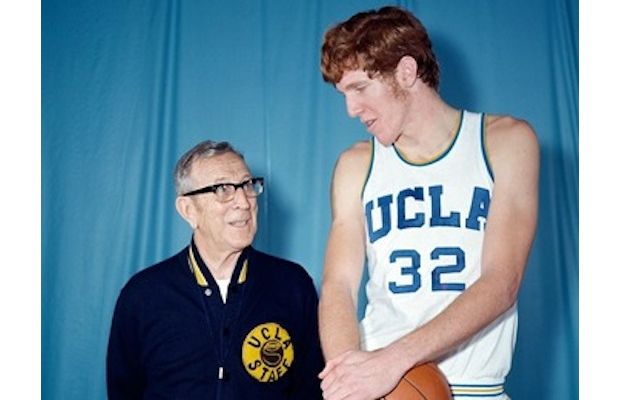
It was an unusual situation for a UCLA basketball team, coached by John Wooden, to find itself in. They were behind. As their star player, Bill Walton, ran by Coach Wooden he asked him if he was going to call a timeout. Wooden said, “No, you know what to do. Now do it.” Like they did most of the time during Wooden’s incredible tenure as coach, they went on to win the game.

Wooden’s favorite part of coaching was practice, not the games. He viewed himself as a teacher, and practice was his opportunity to teach. The games were the players’ opportunity to demonstrate what they had learned.

I thought about Wooden and Walton, practice and games, after attending the wedding recently of Matt Grothe and Rachel Olson. Basketball wasn’t played at the reception. That’s not what triggered the memory.

I’ve known Matt all his life. I taught him in confirmation and youth group, traveled with him to Bible camp each year and a lot of youth conventions. Trying to determine how many sermons he has heard me preach would require pulling out a calculator. In a way I have “coached” him at a lot of “practice sessions.” Now it is time to let him get in the game.

Wooden wasn’t like some coaches. They’re on their feet the whole game, constantly yelling at their players, trying to guide every move they make. Sometimes their players get hesitant to play. They’re afraid to fail. They’re unable to think on their own. They don’t know what to do unless that angry voice is yelling in their ear.

The coach needs to let the players play. The pastor/teacher needs to let young people grow up. They ought to be given the opportunity to put into practice what they have been taught. They’ll make some mistakes along the way, and experience some failure and challenges, as we all do. The teacher watches from the sidelines and gives support and encouragement, and is still available to provide instruction from time to time. But trying to direct their every move usually isn’t helpful.  

Wooden gave his instruction and guidance at practice. When it came time for the game, he trusted the players had been taught well. He didn’t believe in calling many timeouts. He had confidence the players would remember what they had learned.

I don’t have confidence in what I did as Matt’s teacher over the years, but I have confidence in the Word of God that Matt was taught. The good seed of God’s Word was planted. The Holy Spirit has already begun causing that seed to grow and bear fruit. The Spirit will continue to do that.

In II Timothy the apostle Paul gave his son in the faith some final instructions. “But as for you, continue in what you have learned and have become convinced of, because you know those from whom you learned it, and how from infancy you have known the holy Scriptures, which are able to make you wise for salvation through faith in Christ Jesus” (3:14-15).

Paul knew there were dangers and trials ahead for Timothy. But he also knew Timothy had learned the Word. He knew the power of that Word and he trusted the Spirit of God would keep on working in Timothy’s life. Practice had gone well. It was now time to enjoy the game.

Good news at FLY

At our family’s Thanksgiving table there was usually some salad that my mom liked and said was good for us. Sometimes I wasn’t a big fan of it. I was more interested in the mashed potatoes, turkey and sweet potatoes. My parents didn’t say I had to eat a lot of the salad, just give it a try. It wouldn’t have gone over well if I had said, “I don’t like that salad. I’m not going to sit at the table as long as that salad is on the table.”

I focused more on the abundance of things on the table I liked, and didn’t pay much attention to the one thing I didn’t like.

Earlier this month I had the privilege of attending the Free Lutheran Youth national convention. It was kind of like a Thanksgiving feast. There was an abundance of good things there. There were evening worship services, morning Bible studies, afternoon recreation and activities, a wide range of elective workshops a person could attend, opportunity to spend time with friends, all surrounded by the beauty and majesty of the Rocky Mountains.Rocky Mountain National Park

Like the salad at Thanksgiving, there were a couple things that maybe didn’t appeal to my taste, but the issue was just a matter of taste. We all have our own opinions and different ways of doing things. It is easy and natural to sit back and think, “If I was in charge I wouldn’t do it that way.” But the differences were on secondary issues.

The table at FLY was overflowing with good things. The main dish and the best part of the feast, though, was that the good news of Jesus was clearly proclaimed.

The theme of FLY was from Isaiah 53. That chapter is a powerful description of what Jesus suffered on the cross for us. “But he was pierced for our transgressions, he was crushed for our iniquities; the punishment that brought us peace was upon him, and by his wounds we are healed” (Isaiah 53:5). The chapter was read over the course of the evening services. The good news was declared of how Jesus paid for our sins and our relationship with God can be healed.

The good news of Christ isn’t telling people what to do. Inviting people to receive Jesus as Lord and Savior is good to do, but it’s not declaring the good news. It is giving instruction. The good news is proclaiming what Jesus has done. That good news of Jesus’ death and resurrection needs to be proclaimed if people are going to find forgiveness of sins, new life and hope. That good news was shared at FLY.

Sometimes at youth events and in youth material, a lot of good instruction is shared, but not much good news. Young people are often hurting and face many challenges. The strength and encouragement they need is found in the good news of Jesus. I rejoice that the good news was shared at FLY.

The apostle Paul wrote the New Testament book of Philippians while in prison. He had been unfairly put there because he had been telling people about Jesus. While he was there, some on the outside tried to stir up trouble for him. He had a lot he could have complained about. But instead of focusing on things he didn’t like, he focused on what mattered. “The important thing is that in every way, whether from false motives or true, Christ is preached. And because of this I rejoice” (Philippians 1:18).

Christ was preached at FLY, and because of that I rejoice. People heard Jesus loves them so much He suffered and died for them. People heard that God wants to heal their soul. Sure, the lunch line was long. The overflow viewing areas had some technical difficulties the first couple of nights, but they did have really good snacks. A couple of the things that happened during the worship services might have been different than what goes on at your church. But the important thing is Christ was preached. And that’s a great reason to rejoice.

Go to school

At the recent annual conference of our church body – the Association of Free Lutheran Congregations – there was some discussion about education. There often is. People have strong opinions about whether kids should be homeschooled or in Christian schools or public schools.

I know it’s not the case with every public school, but the elementary school that is a block away from our church here in Astoria has been great to work with. For a number of years we have been involved with an afterschool Good News Club. We meet in the school cafeteria. The staff at the school has always been real helpful and supportive of what we’ve been doing.

Sometimes Christians have assumed they’ll face opposition from the local public school, and so they haven’t even asked if they can do something like have an afterschool club.

As an encouragement to pray the Bible says, “You do not have, because you do not ask God” (James 4:2). It is possible that sometimes we miss out on opportunities to serve because we don’t ask. We assume the school will say no, so we don’t ask. Or when the request is made it is not done so in a respectful manner, but the assumption exists that the church and the school are adversaries.

I would encourage Christians and congregations to view their local public school not as an enemy to run from but as a mission field to go to and pray for. Where parents choose to have their own children educated is, of course, their own individual decision. Whatever their decision may be, I would hope Christians would not ignore the needs of the kids in their local public schools. Those kids need to hear the good news about how Jesus loves them.

By the end of this past school year we had around 40 kids coming to our Good News Club. Some of those kids were from our church. Some go to other churches in town. Some of them, though, don’t go to any church. I don’t think they are hearing about Jesus any time during the week, except for that hour at Club. If we didn’t have anything to do with the public school, how would those kids hear that Jesus loves them, died for them, rose from the dead and wants to be their Savior, Lord and Friend? Those kids aren’t going, at least not yet, to any Sunday school or midweek church activities. But their parents let them stay after school for an hour once a week. They might be hesitant to enter a church building, but they’ll stay at the school.

In the story of David and Goliath it tells about how Goliath would shout out his threats and “When the Israelites saw the man, they all ran from him in great fear” (I Samuel 17:24). David, though, had a different spirit. He had confidence in the Lord and knew God was far greater than Goliath. “As the Philistine moved closer to attack him, David ran quickly toward the battle line to meet him” (I Samuel 17:48).

Serving kids in the public schools can present challenges, but instead of running from life’s challenges in fear, let us run toward the challenges with faith in what God can do.

Remembering Fran

I was just looking over some of the reports that will be shared at the AFLC Annual Conference next week. There was the report Dr. Fran Monseth prepared as seminary dean. Fran submitted the report a week before his sudden heart attack and death on March 29. It is not surprising Fran got his report done in time to be included with the other reports. Being disciplined and fulfilling his commitments was part of who Fran was.

In his report Fran writes about “a hope founded in Christ and grounded in God’s Word;” a hope that “sustains and comforts our spirits.” That hope, that our sin has been paid for by Christ and we have eternal life by faith in Him, does sustain and comfort us. We miss our friend, but we are comforted by the hope that what ended on March 29 was not his life, but only his time on this earth. In some ways, on that day life full of joys beyond our imagination began for Fran.

Fran’s report is full of hope and thankfulness. That was Fran. I first started going to annual conferences in 1985. Fran reported as seminary dean at every conference I went to, and each report was full of thankfulness. There were times I kidded him a little before he’d give the report. “I bet it was a good year at the seminary this year.” He’d smile and say, “Well, actually it was.” There were years of trials and challenges, but by God’s grace, there was always reason to rejoice.

I had the privilege of being a student under Fran when I was in seminary and friends with him ever since. I got to travel with him to his beloved home state of North Dakota. I got to ride in an oxcart with him in India as part of a parade before the dedication of a new church building. I got to listen to and laugh at a whole lot of corny jokes he told over the years. I got to have him in my home when he came to be the guest speaker at a Bible conference our congregation hosted a couple of years ago. I got to hear him teach the Word of God and see him live it out over the years.

Nobody is irreplaceable. God’s church is bigger than any one individual and His work will continue on. Fran, being the humble servant of the church that he was, would most certainly agree with that. “Heaven and earth will pass away, but my words will never pass away” (Matthew 24:35).

I appreciated a number of things about Fran, but maybe at the top of the list was what a humble servant he was. One time when I was in seminary, him and I and some others were helping a fellow student move into a new apartment. Fran was carrying boxes just like the rest of us. There was a neighbor kid in the apartment complex who wandered over to watch what we were doing. Fran smiled at him, stuck out his hand and said, “Hi, I’m Fran, what’s your name?” He had degrees and titles, but he didn’t make a big deal of them. He was just God’s humble servant, Fran.

As we think of the next generation of leaders in our church body, I pray God will continue to give us humble servant leaders. It is tempting to look for the one with the powerful presence, the dynamic personality, the overflowing charisma.  I pray, more than those traits, as we vote for leaders we will value humility.

Possibly the greatest leader in the Bible, other than Jesus, was Moses. Numbers 12:3 says, “Now Moses was a very humble man, more humble than anyone else on the face of the earth.” Moses himself said he lacked any real skills in the area of public speaking. In Exodus 18 it tells how the administrative responsibilities of his position were getting to be overwhelming. But he was an effective leader. The core reason for that was his humility.

I give thanks for the humble, godly leader God graciously gave our church body, and the mentor and friend He gave me in Dr. Francis Monseth.